Bank Hacks & Inflation: Are You Getting Your Money’s Worth?
The Viral Post That Started It All
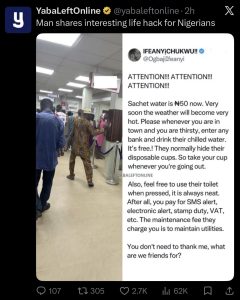
Recently, a social media post went viral across Nigerian digital spaces. The user, @OgbajiIfeanyi, shared a clever “life hack” for citizens facing rising costs.
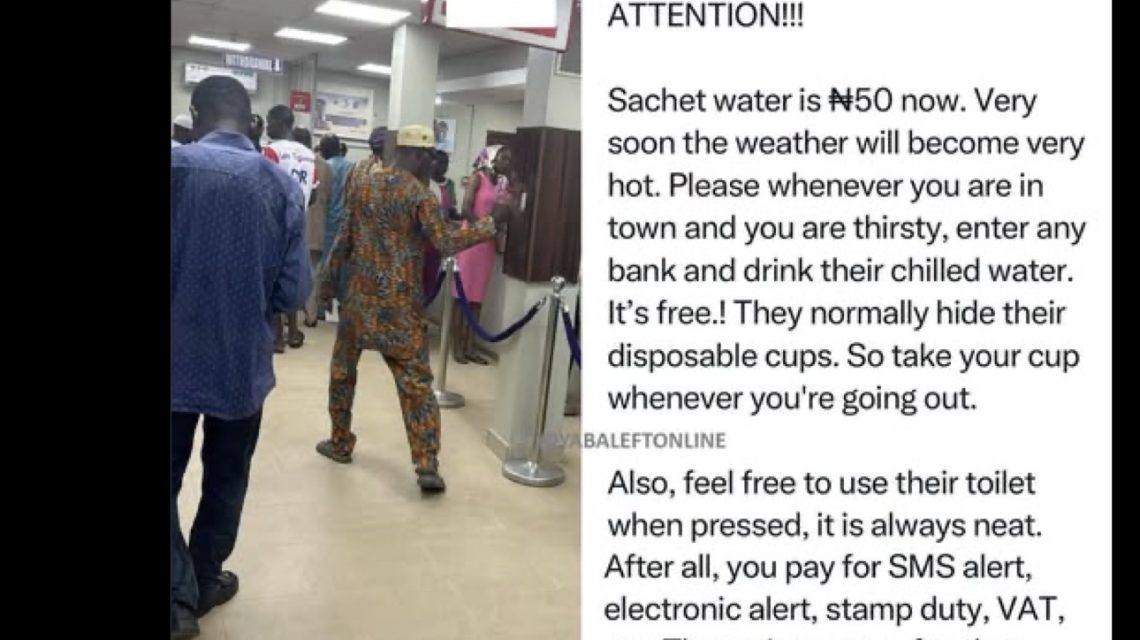
“ATTENTION!
Sachet water is ₦50 now. Very soon the weather will become very hot. Please whenever you are in town and you are thirsty, enter any bank and drink their chilled water. It’s free.! They normally hide their disposable cups. So take your cup whenever you’re going out. Also, feel free to use their toilet when pressed, it is always neat. After all, you pay for SMS alert, electronic alert, stamp duty, VAT, etc. The maintenance fee they charge you is to maintain utilities. You don’t need to thank me, what are we friends for?”
Twitter post
While the post stirred laughter online, it highlights a very real underlying reality: the cost of living in Nigeria is soaring, and citizens are searching for creative ways to get value back from the institutions they pay daily.
1. The Cost of Living Crisis & Everyday Inflation
Rising Costs of Basic Needs
It was not long ago that a sachet of water popularly known across Nigeria as “pure water” was ₦5, then ₦10, and eventually ₦20. Today, in many urban areas across the country, a single sachet sells for ₦50 or more. While ₦50 may seem minor on a single purchase, standard daily hydration requirements (2 to 3 liters per day) mean an individual could easily spend ₦200 to ₦300 daily just on drinking water while out in transit. Over a month, that totals between ₦6,000 and ₦9,000 a noticeable figure against minimum wage earnings. And some don’t drink pure water they prefer bottle water which is x4 of the sachet water.
Shrinkflation and Transportation Pressures
Inflation in Nigeria isn’t just felt at the water vendor’s kiosk; it impacts fuel prices, transport fares, food commodities, and utility tariffs. The concept of shrinkflation where product sizes shrink while prices remain the same or increase has affected everything from bread sizes to detergent packages. When everyday survival costs climb, individuals naturally look for legal, creative avenues to reduce micro-expenses in their daily routine.
2. Understanding Banking Fees in Nigeria
What Are You Actually Paying For?
The viral post quips: “After all, you pay for SMS alert, electronic alert, stamp duty, VAT, etc.” But what exactly are these charges, and how do they add up over a billing cycle?
Here is a breakdown of common commercial bank charges in Nigeria as regulated by the Central Bank of Nigeria (CBN):
Charge Type
Standard Rate / Structure
Purpose
SMS Alert Fee
Up to ₦4 per SMS (or functional cost)
Real-time transaction notification
Electronic Money Transfer Levy (EMTL)
₦50 on transfers from ₦10,000 upwards
Government duty collected via banks
Card Maintenance Fee
Approx. ₦12 (plus VAT) monthly for debit cards
Debit card operational fee
Value Added Tax (VAT)
7.5% applied to applicable service fees
Standard government consumption tax
Off-US ATM Withdrawal Fee
Charged after standard free monthly limits
Inter-bank ATM network usage
The Value Perception Gap
To the average customer, these deduction alerts seem continuous. A few Naira for an SMS, a few Naira for VAT, transfer levies, card maintenance fees, and account maintenance fees for corporate accounts.
Over time, customers begin to feel that banks profit steadily off their deposits while customer service inside the banking halls can sometimes fall short. This disparity creates a desire to maximize every available complimentary service offered inside a branch.
3. Customer Rights: What Banks Owe You
Customer service obligation
Commercial banking halls are designed as corporate spaces meant to serve depositors and account holders efficiently. Under customer service guidelines overseen by financial regulators, banks are expected to maintain clean, safe, and accessible premises for public transactions.
Public Amenities in Financial Institutions
Drinking Water Dispensers: Provided primarily for customer comfort during waiting times.
Restroom Facilities: Available in major branches to serve visitors and long-queue customers.
Air Conditioning & Seating: Installed to provide a comfortable atmosphere during financial inquiries or transactions.
While these facilities are intended for transacting customers, they form part of the overhead cost structure built into the broader banking operations funded by account servicing and transaction revenues.
4. Financial Literacy: How to Reduce Bank Charges Legally
While grabbing chilled water at a bank branch is a practical micro-hack, long-term financial relief comes from optimizing how you manage your bank accounts. Here are practical ways to minimize bank fees each month:
Switch to Email Alerts
Instead of paying per-SMS charges on every credit or debit alert, opt for Email Notifications. Most banks offer free email notifications for transactions, which can save hundreds of Naira monthly while keeping an organized, searchable paper trail of your expenses.
Optimize Transfer Channels
Batch Transfers: Combine multiple small transfers into single larger transactions where possible to avoid repeated transfer fee tiers and EMTL charges.
Fintech Applications: Explore licensed digital financial apps that offer free monthly transfers or zero-fee options for peer-to-peer payments.
Audit Account Statements Regularly
Request your bank statement periodically to inspect for unauthorized or recurring maintenance fees. If you notice erroneous charges, log a formal complaint with your bank’s customer care desk or escalate via official CBN consumer protection channels if unresolved within stipulated timelines.
5. Practical Micro-Frugality Tips for Everyday Nigerians
Beyond banking, practicing smart, sustainable micro-frugality helps cushion the impact of inflation without sacrificing personal health or convenience:
Carry a Reusable Water Bottle: Purchasing a sturdy, BPA-free water bottle allows you to fill up at home, work, or verified safe clean water sources, reducing reliance on single-use sachet purchases throughout the day.
Plan Commutes and Errands: Combine banking errands, market trips, and meetings into single routes to minimize transportation costs.
Track Daily Micro-Expenses: Small daily payments (snacks, airtime top-ups, sachet water) often add up faster than monthly bills. Using simple expense tracker apps or a physical notebook highlights areas where savings can occur.
Twitter comment
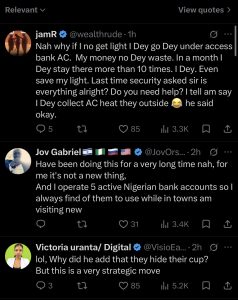
The viral conversation didn’t stop with drinking water and using restrooms. Netizens quickly shared how they leverage banking halls to combat electricity blackouts and scorching weather:
@wealthrude:“Nah why if I no get light I Dey go Dey under access bank AC. My money no Dey waste. In a month I Dey stay there more than 10 times… Last time security asked sir is everything alright? Do you need help? I tell am say I Dey collect AC heat they outside 😂 he said okay.”
@JovOrs…:“Have been doing this for a very long time nah, for me it’s not a new thing, And I operate 5 active Nigerian bank accounts so I always find of them to use while in towns am visiting new”
@VisioEa…:“lol, Why did he add that they hide their cup? But this is a very strategic move”
What these users call a “strategic move” highlights a deeper economic challenge: the soaring cost of self-generated power in Nigeria.
The Hidden Cost of Power & Heat Relief
With electricity tariffs rising and petrol/diesel prices for private generators at all-time highs, staying cool during peak hot weather is no longer cheap.
Running a Small Generator: Operating a small 0.9 kVA to 2.5 kVA generator for just 4 hours daily can cost anywhere from ₦1,500 to ₦3,000 in fuel daily, amounting to ₦45,000–₦90,000 per month.
Band-A Electricity Tariffs: For those on grid power under Band A feeders, electricity costs have increased significantly per kilowatt-hour (kWh).
When citizens spend extended periods in air-conditioned bank premises during power outages, it is a practical response to the high cost of alternative energy.
7. The Shared Economy: Public Space vs. Customer Privileges
Is It Ethical or Practical?
While some might laugh at staying inside a banking hall to “collect AC”, it raises an interesting question: Is this an acceptable use of bank facilities?
1. You Are a Paying Customer: If you hold an active account and pay monthly maintenance fees, card fees, or transaction levies, you contribute to the bank’s operational overhead. Using their lobby amenities while running errands or waiting out extreme heat is reasonable as long as security rules and social decorum are maintained.
2. Branch Security Considerations: As noted in the comment thread, bank security guards monitor long-stay visitors. To avoid security misunderstandings, carry out a minor transaction—such as using the ATM, updating records, or making an inquiry—to validate your presence as a customer.
8. Financial Takeaway: Turn Survival Tactics into Long-Term Energy Efficiency
While utilizing public or corporate air conditioning provides short-term relief, building sustainable home energy efficiency helps reduce reliance on costly fuel generators:
Inverter & Solar Installations: Transitioning to basic solar-inverter setups for essential appliances (fans, lights, device charging) eliminates high daily fuel consumption over time.
Cross-Ventilation & Solar Fans: Investing in rechargeable solar-powered standing fans provides affordable cooling during afternoon blackouts without running heavy generators.
Energy Audits at Home: Unplug vampire power loads (standby electronics) to lower your monthly electricity bill.
Final Thoughts
The viral advice to drink bank water and use clean branch restrooms resonates because it speaks directly to the financial pressure everyday citizens feel.
While using bank amenities as an account holder is completely reasonable, true financial freedom relies on broader financial literacy: knowing your consumer rights, auditing your banking fees, and adopting intentional spending habits.
The next time you walk into a banking hall, remember that those amenities are there for customer comfort and taking control of your financial health starts with understanding every Naira that enters and leaves your accounts.